The Brush That Takes Over Montgomery County Land
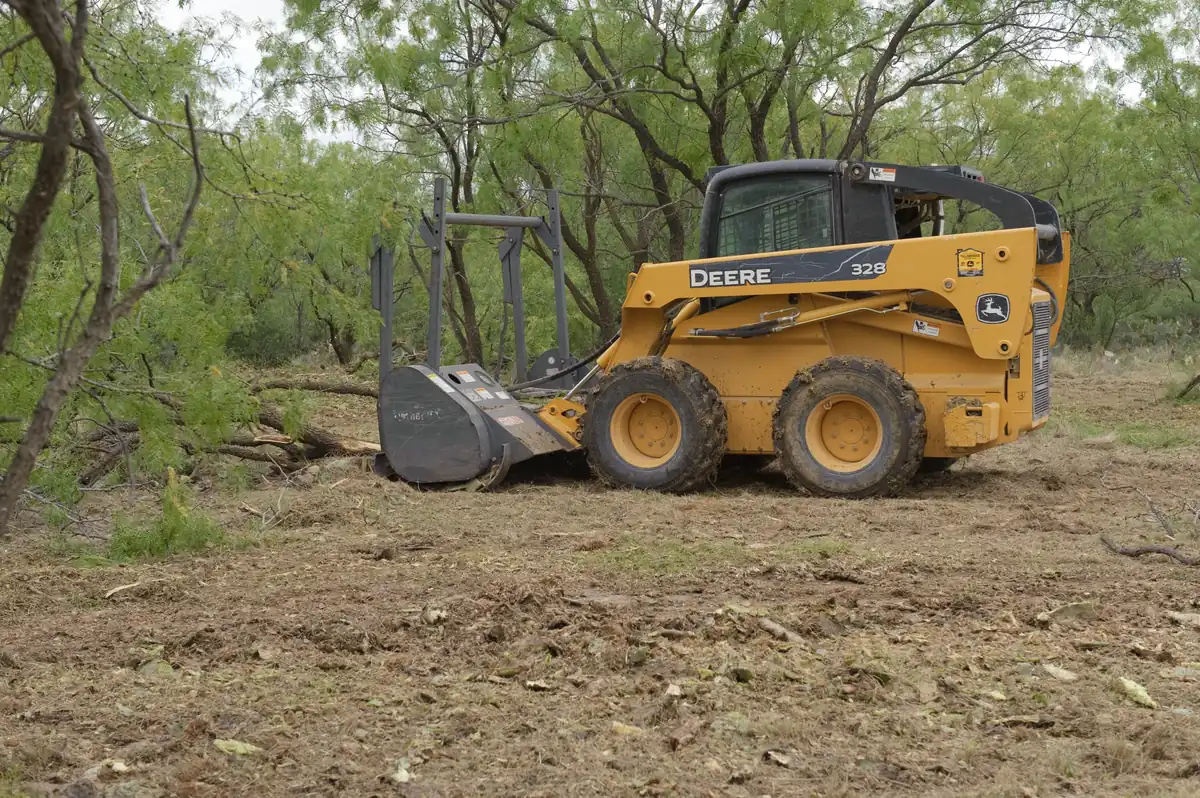 Photo: USDA NRCS Texas (public domain)
The usual suspects around Clarksville:
- Chinese privet — solid walls along fence lines and creek bottoms
- Bush honeysuckle — shades out everything native underneath it
- Blackberry and greenbrier thickets — impassable and self-expanding
- Volunteer eastern red cedar — a nuisance at 2 feet, a clearing project at 12
- Sapling regrowth — sweetgum, hackberry, and elm on any disturbed ground
None of this stops on its own. Brush clearing is buying the ground back — then keeping it with cheap maintenance passes instead of another full reclaim.
What We Clear
- Overgrown lots and back acreage — full reset of land you've lost to growth, whether it's a quarter-acre behind the house in St. Bethlehem or ten rough acres near Cunningham
- Property lines and fence rows — expose your boundary, your fence, and your survey pins; pair with fence line clearing for new fencing
- View clearing — selective removal that opens the sightline to the creek, the ridge, or the pond without clear-cutting the buffer
- Understory cleanup in woods — take out the privet, honeysuckle, and deadfall while keeping the mature trees, turning a thicket into park-like woods you can walk
- Pre-sale cleanup — realtors know it: buyers can't want land they can't walk. A day of clearing routinely changes how a listing shows
Most brush work is done by forestry mulching, which grinds everything into a mulch layer on the spot — no burn piles, no hauling, no Tennessee burn-permit season (October 15–May 15) to schedule around.
What Brush Clearing Costs in Clarksville
Brush work is priced like the mulching it mostly is:
- Light brush and briars: roughly $350–$600 per acre
- Heavy brush with cedars and saplings: roughly $400–$800 per acre, more when growth is dense enough to hide the ground entirely
- Small residential sections: minimum charges apply below about an acre — typically a few hundred dollars to get the machine there and a section cleared the same day
- Maintenance passes: once reclaimed, keeping land open runs far less — industry-typical $500–$1,500 per visit every 1–3 years depending on acreage and how aggressive the regrowth is
Slope, access, and wet ground move these numbers, which is why the on-site estimate is free and the written price is firm. Full pricing logic is in the cost guide.
Our Brush Clearing Process
- Site walk. We flag keep-trees and boundaries with you, check for hidden obstacles — old fence wire, stumps, sinkholes, dump piles — and agree on exactly what "cleared" means before quoting.
- Machine work. Mulcher for most growth; brush cutter or grapple where terrain or debris calls for it. Hand crews only where machines genuinely can't go.
- Finish pass. Edges tidied along fences, drives, and keep-trees; the mulch layer left even and walkable.
- Walkthrough. You approve the result before we load the trailer, and we'll tell you honestly when to expect regrowth and what a maintenance pass will cost.
Frequently Asked Questions
How often does brush grow back after clearing?
In Middle Tennessee, expect meaningful regrowth in 1–3 years — privet and honeysuckle resprout, and cedar seedlings keep arriving by bird. The mulch layer from mulching slows it down considerably, and a periodic maintenance pass (typically $500–$1,500 per visit depending on size) keeps land open for a fraction of the original clearing cost. Reclaim once, maintain cheap.
How much does it cost to clear brush on a small lot?
Under about an acre, minimum charges apply because getting the machine on site costs the same regardless of job size — most small-lot brush jobs land in the few-hundred-dollar range and finish the same day. Call (931) 440-8299 with the address and a photo and we'll give you a real number, not a range.
Will you kill the privet and honeysuckle for good?
Machine clearing removes the standing growth; both species can resprout from roots. We're straight about that: the realistic strategies are periodic maintenance passes, follow-up treatment of resprouts, or dense grass establishment that outcompetes seedlings. What we won't do is promise a one-pass permanent kill that nobody can actually deliver.
Can you clear brush without taking out my trees?
Yes — selective clearing is most of what we do. Mulchers work around keep-trees cleanly, so mature oaks, maples, and shade trees stay while the understory mess goes. Flag what you love during the site walk, or we'll flag it together.
Is winter a good time for brush clearing?
One of the best. Vegetation is dormant and mulches cleanly, firm ground protects your yard from ruts, visibility is better without leaves, and the ticks and snakes are gone. Our calendar is also usually easier to get on between November and February.