What Forestry Mulching Actually Is
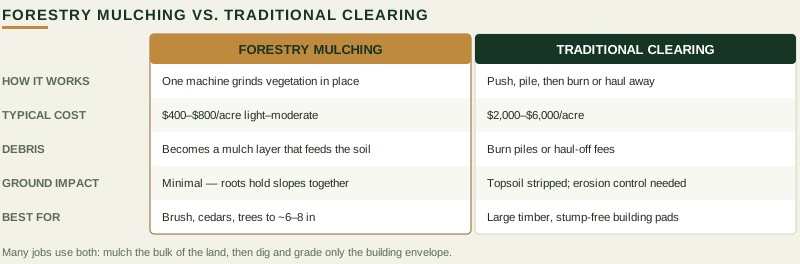
A forestry mulcher is a heavy steel drum studded with carbide teeth, mounted on the front of a tracked skid steer or dedicated carrier. The drum spins at high speed and shreds standing vegetation — briars, privet, honeysuckle, cedar, saplings, and trees up to roughly 6–8 inches in diameter — into chips that drop straight to the ground as a mulch layer.
That "in place" part is what changes the economics. Traditional clearing is really three jobs: knock it down, pile it up, then get rid of it by burning or hauling. Mulching collapses all three into one machine and one pass. Nothing leaves the property, nothing gets burned, and there's no scarred, root-balled moonscape to repair afterward.
Why Mulching Fits Clarksville Land So Well
Montgomery County's problem vegetation is almost custom-made for a mulcher:
- Eastern red cedar — the tree that eats untended fields around Sango, Woodlawn, and Palmyra. Most volunteer cedar is well inside mulcher diameter, and a mulcher erases a decade of encroachment in a day.
- Bush honeysuckle and privet — the invasive understory that turns creek bottoms and fence rows into walls. Mulching shreds it at ground level and the mulch layer slows regrowth.
- Briars and blackberry thickets — miserable by hand, trivial by drum.
- No burn permit needed. Tennessee requires a free Division of Forestry burn permit for open-air debris burning from October 15 through May 15, and Clarksville's city burn rules add pile-size, wind, setback, and daylight restrictions — piles over five feet in diameter need a city permit. Mulching makes the whole question disappear — nothing is burned.
- Karst and slopes. A lot of local ground is rocky, thin-soiled, or pitched toward a creek. Mulching doesn't strip the topsoil or tear out root mats, so slopes stay stable — the mulch blanket actually protects against the erosion that dozer clearing invites.
The Benefits, Concretely
- Cheaper than traditional clearing for most jobs — one machine and operator versus a dozer, excavator, and burn crew or trucking; typical savings run 50% or more per acre on brush-dominated land.
- Fast — roughly 1–3 acres per day depending on density and terrain.
- The mulch works for you — suppresses regrowth, holds moisture, feeds the soil as it breaks down.
- Erosion control built in — roots stay in the ground, mulch blankets the surface; a real advantage on sloped, creek-cut parcels.
- Selective — the machine steers around keep-trees; the big white oak stays, the cedar thicket around it goes.
- No cleanup phase — when the machine loads up, the job is done.
What a Mulcher Can and Can't Handle
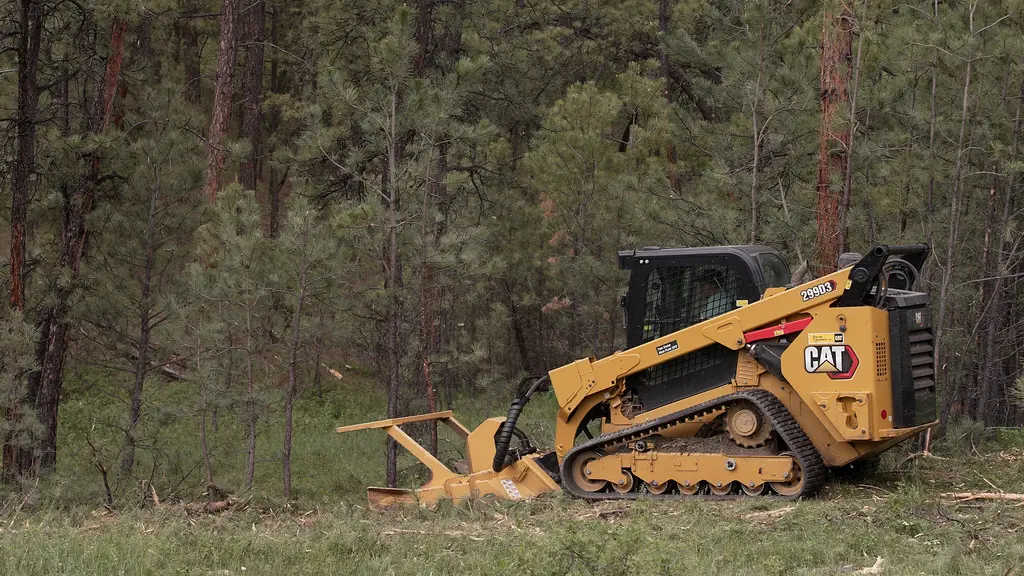 Photo: USDA NRCS Montana (public domain)
Honest limits, because a quote that ignores them will bite you later:
- In its wheelhouse: brush, vines, briars, invasives, saplings, cedars, and most trees up to about 6–8 inches in trunk diameter. This describes the large majority of overgrown Clarksville acreage.
- Case by case: trees in the 8–12 inch range — sometimes mulchable, sometimes better dropped with a saw first and then mulched or bucked for firewood. We decide tree by tree on the site walk.
- Not mulcher work: mature hardwoods, big timber, and anything you want fully removed roots-and-all. Those get cut and handled separately, or the job shifts to traditional lot clearing.
- Stumps: a mulcher grinds stumps down to roughly ground level, which is perfect for pasture, trails, and appearance — but not for building over. Foundations and driveways need stump removal or deep grinding.
- Ground contact: mulching leaves roots in the soil. Great for erosion, wrong for a building pad — pads need grubbing and grading.
What Forestry Mulching Costs in Clarksville
Ranges, because density and terrain move the number — a firm price takes a site walk, which costs you nothing:
- Light growth (brush, briars, scattered saplings): roughly $350–$600 per acre
- Moderate growth (typical mixed cedar/brush, trees to ~6"): roughly $400–$800 per acre
- Dense growth (thick cedar stands, heavy woods, larger stems): roughly $900–$2,000+ per acre
- Small lots: minimum charges apply under about an acre, since mobilization costs the same whether the machine works two hours or two days — still usually far cheaper than a cleanup crew doing it by hand.
Multi-acre jobs earn per-acre discounts because the mobilization cost spreads out. Compare all of this against traditional clearing at $2,000–$6,000 per acre in the full cost guide.
Forestry Mulching vs. Dozer Clearing
| Forestry Mulching | Dozer/Excavator Clearing | |
|---|---|---|
| Typical Clarksville cost | $400–$800/acre (dense: $900–$2,000+) | $2,000–$6,000/acre |
| Debris | Mulch layer left in place | Burn piles or haul-off, both extra |
| Burn permit (Oct 15–May 15) | Not needed | Needed if burning |
| Topsoil & erosion | Preserved; mulch protects slopes | Stripped; erosion control required |
| Stumps & roots | Ground to grade, roots remain | Removed entirely |
| Build-ready pad | No — needs grubbing/grading after | Yes |
| Best use | Acreage cleanup, pasture, trails, views, invasives | Building pads, large timber |
Rule of thumb: mulch the land, dig the pad. Most build-site clients have us mulch the bulk of the parcel and reserve traditional clearing for the building envelope — the blended price beats dozing everything by thousands.
Before and After: What to Expect
Frequently Asked Questions
How much does forestry mulching cost per acre?
In the Clarksville area, typical light-to-moderate growth runs $400–$800 per acre, with light brush starting around $350 and dense, heavily wooded ground running $900–$2,000+. Access, slope, and stem size move the number, which is why we quote firm prices only after a free on-site walk — but we'll give you an honest ballpark from photos over the phone.
How big of trees can a forestry mulcher handle?
Comfortably up to about 6–8 inches in trunk diameter, which covers volunteer cedars, saplings, and most encroachment growth. Trees in the 8–12 inch range are judged individually; larger hardwoods get cut with a saw and either mulched in pieces, bucked for firewood, or handled under a lot clearing scope.
Will clearing cause erosion on my sloped land?
Mulching is the clearing method built for slopes. Root systems stay in the ground holding soil, and the mulch layer blankets the surface against rain — the two things bulldozer clearing removes. On the creek-cut, karst-riddled ground around Montgomery County, that difference is often the deciding factor.
Do I need a burn permit if you mulch my land?
No — nothing is burned, so Tennessee's Division of Forestry burn-permit season (October 15–May 15) and Clarksville's open-burning rules don't apply to your job. That matters most inside city limits, where burn piles over five feet in diameter require a city permit and every burn is subject to wind, setback, and daylight-hours rules.
How long does mulching take?
Plan on roughly 1–3 acres per day depending on density, slope, and stem size. A typical 5-acre cedar-and-brush job runs two to three days; a one-acre lot cleanup is usually done before dinner. You get a timeline in writing with the quote.